Eco-Friendly Plastic Recycling Services in Singapore.
Annually, the nation throws away a volume of plastic equivalent to more than two thousand Olympic swimming pools. It’s a reminder that simple habits can produce significant results. Advance Recycling Singapore provides environmentally responsible recovery options and plastic recycling services. They process waste into materials that can be used again.
Advance Recycling delivers licensed, NEA-aligned plastic recycling and sustainable waste management. Their clients include homes and companies. They provide easy Advance Recycling collection points, regular collection runs, and business programs. These help divert plastic from landfills into reusable materials and recycled pellets.
Through rigorous sorting and processing, Advance Recycling supports local upcycling and manufacturing. They help companies meet regulatory expectations. Their goal is to reduce landfill pressure and advance a circular economy in Singapore.
Highlights
- Advance Recycling delivers licensed, eco-friendly recycling solutions across Singapore.
- Services cover individuals (drop-off) and businesses (scheduled pickups, corporate programs).
- Focus on turning plastic waste into recycled pellets and reclaimed materials.
- Workstreams adhere to NEA rules for sustainable waste practices.
- Aims: high diversion from landfill plus strong support for local upcycling and manufacturing.
Why Sustainable Plastic Recycling Matters in Singapore
Plastic waste volumes are substantial in Singapore. This includes bags, bottles, and industrial scraps. Without correct segregation, materials quickly lose value.
More comprehensive recycling capacity is needed. Facilities need to accept different types of plastics. This way, more materials can be reused, not sent to landfills.
Plastic pollution threatens ecosystems. It can take decades to break down and harms marine life. Recycling and upcycling keep plastics from entering waterways and seas.
Cleaner recycling helps the environment by reducing greenhouse gas emissions. It also supports local businesses by providing them with recycled materials. Together, this builds a stronger closed loop locally.
The NEA plays a key role in regulating waste management. Licensed operators follow stringent handling and processing standards. This ensures public health and legal compliance.
Examples from regulated operators show the model works. They report on their recycling efforts and follow NEA guidelines. The result is safe, compliant service delivery.
Meeting national targets requires strong recycling focus. Strong recycling services and waste reduction programs are key. This lowers virgin demand and supports circularity.
Overview of Advance Recycling — Singapore’s Sustainable Partner
Across homes and businesses, Advance Recycling acts as a green partner. They turn plastic waste into useful materials and products. They also track their impact and make materials last longer.
This helps follow zero-waste goals and offers practical circular solutions. They’re built around local community needs.
Mission and Zero-Waste Focus
The mission is to reduce landfill use by recirculating plastics. They track how much waste they divert and work with designers. Together they produce upcycled furniture and corporate gifts.
These efforts position the company as a local sustainability leader.
Licensed operations and regulatory compliance
The company has NEA licenses for handling plastic waste. Traceability spans collection through processing. That meets buyer expectations for recycled-content procurement.
Being compliant also lowers risks for companies wanting to buy recycled content.
Services for Individuals and Organizations
Advance Recycling has services for everyone. They offer drop-off for individuals and scheduled pickups for businesses. They also have corporate programs for offices and factories.
These programs include on-site assessments and sorting help. They also provide logistics for large amounts of waste.
Processing and cleaning culminate in pellets and reclaimed feedstocks. They offer partnerships for upcycling projects. They also provide workshops and educational programs to improve recycling rates.
Plastics Accepted and Recovered
Advance Recycling handles many types of plastics in Singapore. They take in beverage and food containers, household films, and more. This helps with recycling and industrial recovery.
PET arrives primarily from bottles and clear packaging. This goes into PET recycling, making flakes and pellets. HDPE from jugs and detergent bottles becomes durable containers and piping.
LDPE covers thin films and retail bags. These become flexible sheets and pellets. PP from caps and molded parts is recovered as durable regrind.
Construction and specialty items provide polyvinyl chloride and acrylic scrap. PVC recycling makes rigid profiles and piping. PMMA becomes reclaimed sheet and machinable stock.
Acceptance: Post-Consumer and Post-Industrial
They accept both household and corporate scrap. Household collections include bottles and packaging. Corporate scrap includes production offcuts and rejects.
Sorting by source and cleanliness reduces contamination. This improves yields and lowers costs for recycling services.
Benefits of polymer-specific sorting
Polymer-specific sorting boosts quality and value. Clean, single-polymer streams have consistent melt properties. That consistency benefits pelletizing and upcycling.
| Polymer | Common Sources | Primary Recycled Outputs | Typical Uses |
|---|---|---|---|
| PET | Beverage bottles, food containers | Flakes, pellets | Bottles, fiber, packaging |
| High-Density Polyethylene | Milk jugs, detergent bottles, crates | Regrind pellets | Containers, piping, durable goods |
| LDPE | Retail bags, stretch film, wraps | Sheet and pellets | Flexible packaging, liners, sheeting |
| PP | Caps, tubs, molded parts | Pellets/regrind | Injection molded parts, textiles |
| PVC | Pipe, profiles, frames | Rigid reclaim | Building components, profiles |
| PMMA | Acrylic panels, signage, displays | Sheet reclaim, granulate | Signage, glazing, custom products |
How the Service Works: Collection to Output
Advance Recycling offers various collection services for homes, offices, and factories in Singapore. Residents can use local drop-off hubs. Businesses and homes can also schedule regular pickups for easy waste removal.
Custom business programs streamline waste handling. Guidelines specify acceptable items and prep steps. Regular pickups help keep recycling rates high by reducing contamination.
Sorting begins on arrival, with type-based segregation. Staff and machines remove non-recyclables and contaminants. Cleaner feeds have higher value and yield.
Post-sorting, cleaning and size reduction occur. Material is shredded, washed, and granulated. Granulate is melted and pelletized into consistent outputs.
A portion supplies local manufacturers. Others are used in upcycled projects. Designers make products like furniture and gifts from the recycled plastic.
These efforts reduce the need for new plastic and keep tons out of landfills. Firms track progress and meet sustainability targets. The whole process makes a big difference in recycling.
Eco-Friendly Recycling Solutions and Circular Economy Practices
Advance Recycling turns plastics into valuable materials. Programs are designed to strengthen the local circular loop. They work with designers and manufacturers to keep materials in use longer.
Value-Adding Upcycling projects show how waste becomes valuable products. Partners include furniture studios and corporate gift makers. Outputs include bespoke items made from recycled PET and HDPE.
Localizing processing reduces transport emissions. It strengthens Singapore’s sustainable waste management network. Local making also supports social enterprises and small fabricators.
Measuring impact relies on clear, trackable metrics. Typical indicators include annual tonnage and recovery percentage. Landfill diversion tracking clarifies environmental ROI.
Below is a comparison of common indicators versus typical industry figures. It shows performance and progress.
| Metric | Industry Typical (Annual) | Advance Recycling KPI (Expected) | What it Shows |
|---|---|---|---|
| Tonnes processed | 2,778 | 2.5k–3.0k | Scale of throughput and operational capacity |
| Tonnes recycled | 2,603 | 2.3k–2.8k | Material diverted from waste |
| Landfill diversion rate | 94% | ~90–95% | Recovery effectiveness |
| Upcycled SKUs | 10–25 SKUs | 15–30 SKUs | Range of value-added offerings |
| Local production share | 60%–80% | ≥70% | Strength of local circularity |
Transparent reporting helps clients communicate progress. Regular updates build trust with stakeholders. Tracking landfill diversion is key to any credible sustainability narrative.
How Advance Recycling Supports Businesses and Community Programs
Advance Recycling helps companies and groups turn plastic waste into useful resources. Services are tailored to organization size, industry needs, and local regulations. The result is stronger workplace and neighborhood recycling.
They start with a site assessment for custom recycling plans. Teams receive collections, sorting guidance, and documentation for compliance and reporting. This helps hotels, food chains, and makers cut down on waste and work better.
Training workshops are also provided. Sessions show staff and residents how to sort and reuse. With demos, projects, and Q&A, they share the best ways to recycle. This training helps more people join recycling efforts and community programs.
Local designers and makers are key partners. Outputs include branded gifts, office items, and promotional pieces from recycled plastics. This shows off the value of recycling and creates unique products that show off a company’s green goals.
Community initiatives are strengthened by these collaborations. They work with councils, schools, and groups to set up recycling spots and spread the word. Access improves, recycling volumes rise, and a reuse culture grows.
Facilities, Capacity, and Yearly Impact
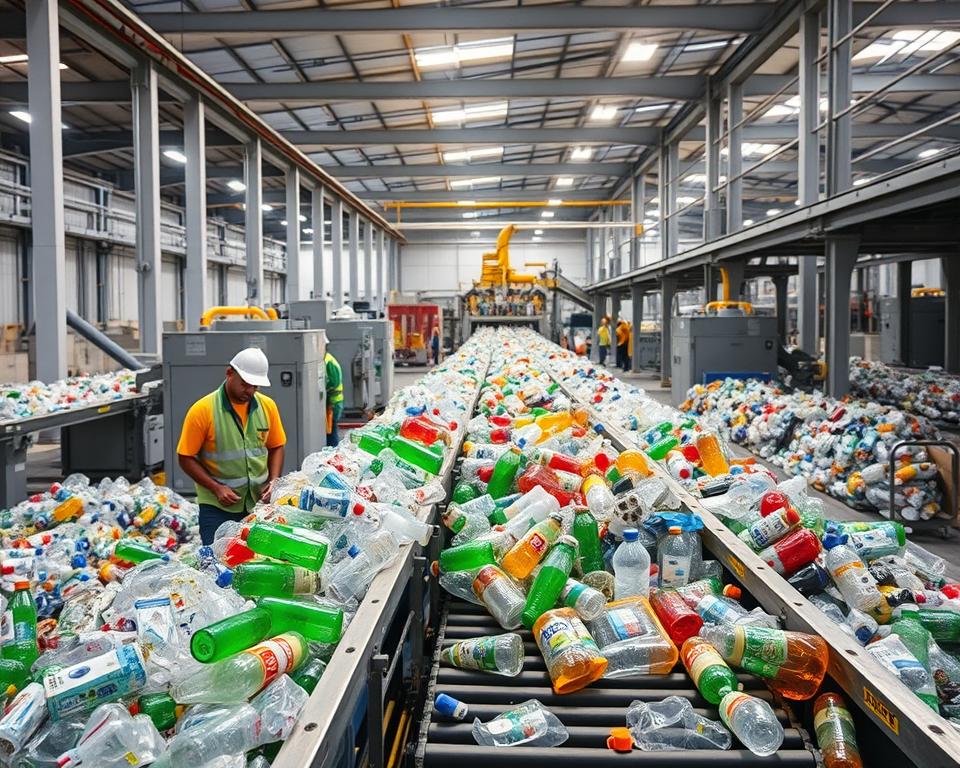
Singapore has many recycling facilities. They use both manual and automated methods to sort and process plastic waste. Equipment like conveyor-fed sorters and dryers help clean and prepare the plastic for reuse.
Capacity depends on plant scale and licensing. Some recycling companies process thousands of tonnes each year. For context, annual figures like 2,778 processed and 2,603 recycled are achievable.
Processing ranges and yearly tonnage are shared by Advance Recycling. This helps manufacturers plan their use of recycled pellets. Capacity visibility aligns collection, storage, and processing.
QC and traceability are critical. Facilities check materials at each stage and keep detailed records. This ensures that recycled pellets meet quality standards and can be traced back to their source.
Integrated systems connect equipment to digital records. This reduces contamination risks and speeds up quality checks. It also helps meet strict material grades for food-contact and engineered products.
Selection criteria should include clear capacity and throughput reporting. Review QC and traceability procedures. These factors make recycling partnerships more reliable and increase the value of reclaimed resins.
Getting Started with Advance Recycling
Ready to begin? It’s easy for both residents and businesses. Just follow a few simple steps to prepare your materials, arrange pickups or drop-off plastics, and complete the recycling onboarding process.
Household Preparation
Rinse food residue and flatten bottles where feasible. Sort plastics by type: PET, HDPE, LDPE, PP, PVC, PMMA. Remove non-plastic parts like pumps and metal clips. Then, put sorted items in clear bags or labelled bins for drop-off.
Where to bring materials
Find designated drop-off plastics locations listed by Advance Recycling. Verify hours and prep rules beforehand. Good sorting reduces contamination and speeds processing.
Business assessment and planning
Begin with a waste assessment to map volumes and polymers. This guides a custom collection schedule and pricing. You’ll get advice on segregation, storage bins, and signage for staff.
Scheduling & Rollout
After the assessment, Advance Recycling suggests a pickup plan and staging. Set up segregation points and train staff. Regular pickups start when storage and labeling meet standards. This keeps operations compliant and efficient.
Contact & Onboarding
Start by contacting Advance Recycling via email or phone with waste details. A site or virtual assessment may follow. Expect a proposal, timelines, and staff training materials.
Docs & Support
Compliance paperwork and collection records are provided. Training and periodic reviews keep contamination low. They offer clear communication for any adjustments or issues.
Cost Considerations, Incentives, and Environmental ROI
Businesses should balance costs with benefits. Fees vary based on how often you collect, how far to the facility, and the type of plastics. Contamination and pre-sorting needs also affect pricing.
Heavy washing or reprocessing can raise fees. Companies should also think about costs for containers, staff time, and pickup fees. This helps in understanding the total expenses.
Favorable contract terms reduce long-run costs. Steady volumes and multi-year deals often secure better rates. Per-ton costs typically drop.
Cleaner bulk streams reduce sorting costs. Taking pre-sorted materials to a licensed facility can also save money compared to frequent pickups.
Singapore provides multiple recycling incentives. Companies get credits for sustainability reports, better brand image, and lower landfill fees. Volume rebates and local-manufacturing discounts may apply. Such incentives offset startup costs and support sustainability goals.
Measuring environmental ROI makes the benefits clear. Track diversion, virgin displacement, and CO2e reductions. Throughput above ~2,600 tonnes is a useful benchmark for impact.
Reporting these KPIs strengthens disclosures and validates investment.
A concise table can map cost drivers to savings levers. This helps finance teams make better choices.
| Driver | Typical Impact | Ways to Reduce |
|---|---|---|
| Collection frequency | More frequent pickups increase cost | Consolidate pickups; use on-site bins; schedule weekly bulk runs |
| Contamination | Raises processing cost and lowers value | Staff training; clear labeling; pre-sorting at source |
| Distance to facility | Longer hauls increase transport fees | Use local processors; optimize route planning |
| Material type and volume | High-volume, homogeneous streams lower per-ton recycling costs | Streamline procurement; separate polymers by type |
| Processing complexity | Intensive washing/pelletizing adds cost | Partner with facilities that match required output quality |
| Contract length | Short contracts may be pricier per pickup | Secure multi-year agreements |
Seeing recycling as part of corporate sustainability adds value. Clear metrics on environmental ROI can be used in reports, customer communications, and CSR disclosures. Visible diversion and virgin savings strengthen the business case.
Conclusion
Advance Recycling’s plastics work is central to Singapore’s sustainable waste ambitions. They use special processing for different plastics like PET and HDPE. These methods produce pellets and enable upcycled goods.
Ease-of-use options include drop-off and scheduled pickups. They also have programs for businesses. Altogether, recycling becomes simpler and more effective.
Operational focus is on efficient, high-quality recycling. They sort, clean, and process plastics to improve their quality. This helps local businesses and supports the environment.
Recycling helps businesses comply and conserve resources. It also reduces waste and decreases virgin material use.
People and companies can start recycling by preparing plastics correctly. Then, they can contact Advance Recycling for help. Joining their workshops and community projects can help Singapore’s waste goals.